What Would Evans Spring Say?

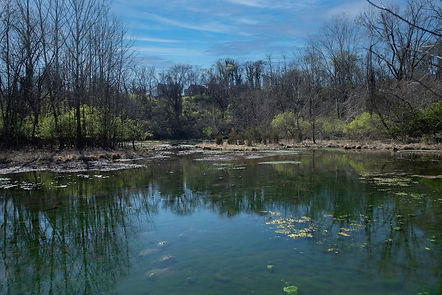
As the conversations continue around Evans Spring, I think there’s an important question we should all ask ourselves: Have we truly listened to the land? Not looked at it as property. Not looked at it only through numbers, development plans, or economics. But actually sat with it quietly and asked ourselves what role it still plays for the people of Roanoke. For over a decade, I’ve spent time sitting with the rivers, streams, mountains, and trees throughout this region. Not for entertainment, but because that’s where I found healing. That’s where I found clarity during difficult moments in my life. Nature became medicine for me long before I had words for it. That’s one reason why Evans Spring means something deeper to me.
A lot of people speaking on this situation have connections to Northwest Roanoke, and those voices absolutely matter. But I also believe many people still don’t fully understand the land itself and what spaces like this mean spiritually, emotionally, and mentally for a community. Long before this place was called Evans Spring, this land already had meaning. The original Indigenous people of this region understood something many of us have forgotten — the Earth is alive. The water, the trees, the soil, the animals, all of it works together as one living system.
What’s interesting is that science is now catching up to what ancient people already knew. Scientists now talk about how forests communicate underground, how trees support one another, and how human health is directly connected to nature and green spaces.
The Earth isn’t separate from us. We are part of it. One teaching I carry with me is the principle of Seven Generations — the idea that before making major decisions, we should consider how those decisions will affect the next seven generations.
That matters because many of our young people are already struggling.
As someone who works with youth daily, I see it firsthand. A lot of young people are depressed, disconnected, anxious, and emotionally exhausted. Many feel disconnected from themselves, their community, and especially the natural world.
But I’ve also seen how the land can restore something inside of them.
I remember taking a young man to the river who barely spoke in class. He often came to school tired and withdrawn and was dealing with challenges at home. One day I took him to sit by the water.
We breathed. We sat quietly. He played in the river for a while without pressure or distraction. Afterward, he looked at me and said,“Mr. Stovall, next time you come to the river, please take me with you. ”I asked him why. He said, “Because it made me feel calmer.”
That stayed with me because this was a teenager who barely opened up in the classroom, yet the land helped him discover a place within himself where he felt peace.
That’s the medicine I’m talking about. Natural spaces like Evans Spring are not just empty land waiting to be developed. They are breathing spaces. Healing spaces. Places where people — especially young people — can reconnect with themselves in a world that constantly overstimulates and disconnects them.
I understand cities grow and change. I understand development is part of that process. But I also believe there has to be a balance. Once ecosystems are destroyed, they cannot truly be replaced within our lifetime.
Maybe before making final decisions, we should all take a moment to slow down and ask:
What would Evans Spring say if we actually listened?


Comments