Dr. John Henry Pinkard: The Life of Roanoke's Legendary Herbal Healer and Community Builder

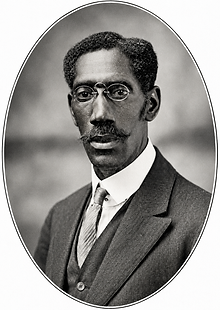
Few individuals have left a mark on the Roanoke Valley quite like Dr. John Henry Pinkard. Known by many as "Doc Pinkard," he was an herbal practitioner, entrepreneur, landowner, banker, churchman, and one of the most influential African Americans in Southwest Virginia during the early twentieth century.
His life is a story of determination, faith, self-education, business success, and service to his community.
Humble Beginnings in Franklin County
John Henry Pinkard was born in Franklin County, Virginia, in 1865, the same year slavery ended in the United States. He was the son of Sam and Sarah Pinkard and grew up in conditions of extreme poverty. According to a biographical sketch published during his lifetime, the family's hardships were so severe that at just eleven years old, Pinkard became the primary support for his family despite his mother's objections.
By age fifteen, he was working for the Norfolk and Western Railway on the New River Division while it was under construction. He began as a water boy but quickly demonstrated unusual intelligence and leadership. After learning how to read grade markers used by railroad crews, he was promoted to supervise a gang of twelve men and earned $2.75 per day, a significant responsibility for someone his age.
At eighteen, he purchased an 88-acre farm for his family. Unfortunately, the property was later lost because of a defective title. Rather than allowing this setback to defeat him, Pinkard used it as motivation to pursue bigger goals.
Education and Medical Studies
After losing the family farm, Pinkard traveled to Pittsburgh, Pennsylvania, where he studied medicine at what sources describe as the Western University of Pennsylvania. Historical records indicate that he pursued medical studies and practiced in Pittsburgh for approximately ten years before returning to Virginia. However, researchers have noted that it remains unclear whether he ever earned a formal medical degree.
What is clear is that Pinkard became a serious student of physiology, anatomy, pathology, chemistry, botany, and materia medica—the study of medicinal substances. His knowledge of plants and healing would become the foundation of his life's work.
Building a Healing Practice
Upon returning to Southwest Virginia, Pinkard began manufacturing botanical remedies made from roots, bark, leaves, buds, flowers, and shrubs. His most famous product was "Pinkard's Great Liniment," which was marketed as a treatment for pain, rheumatism, back problems, and other ailments.
His office on Salem Avenue in Roanoke became one of the busiest healing centers in the region. Patients traveled from across Virginia and from many other states to seek his help. By 1919, records indicate he had patients from at least fifteen states and the District of Columbia. His business reportedly generated between $1,000 and $1,500 per week through remedy sales and consultations.
Many who visited Pinkard believed he possessed extraordinary diagnostic abilities. Contemporary supporters claimed that he could identify illnesses without taking a patient's pulse and sometimes without extensive questioning. His legal adviser and business manager, Andrew J. Oliver, attributed this ability to a form of "second sight" and described him as possessing a remarkable understanding of the human body.
While such claims helped build his reputation, they remain matters of belief and personal testimony rather than scientifically verified fact.
Success Beyond Medicine
Pinkard's success extended far beyond herbal medicine.
He invested heavily in real estate, owned farms, operated businesses, and became involved in banking. His financial success made him one of the wealthiest African Americans in the Roanoke area during the Jim Crow era.
One of his most significant accomplishments was the development of Pinkard Court, a residential community created on land he purchased in Roanoke County. During a period when housing opportunities for African Americans were severely limited by segregation, Pinkard Court represented economic opportunity and community development.
Historical accounts also describe Pinkard as a generous supporter of churches, charities, and educational causes. He believed in using his success to strengthen the institutions that served Black communities.
Faith, Family, and Character
Pinkard was deeply connected to the church throughout his life. Sources describe him as a religious man who donated generously to faith-based causes and community projects.
His wife, Mary Pinkard, played an important role in both his household and business affairs. Contemporary writings described their partnership as harmonious and credited her with contributing significantly to his success.
Despite his growing wealth, those who knew the couple often emphasized their modesty and commitment to serving others.
Challenges and Controversy
Pinkard's career was not without controversy.
Because he did not hold a recognized medical license, he faced criticism from members of the medical establishment. Historical records show that he was fined on several occasions for activities that authorities believed crossed into the practice of medicine without proper credentials.
Nevertheless, he continued to operate his healing practice and maintained a loyal following until the end of his life. Many patients believed his remedies had helped them when conventional treatments had failed.
Death and Legacy
John Henry Pinkard died of tuberculosis on January 29, 1934. Reports state that his mother, who was approximately one hundred years old, was at his bedside when he passed away. He was buried in Franklin County, Virginia, the place where his journey had begun nearly seventy years earlier.
Today, Pinkard remains one of the most fascinating figures in Virginia's African American history. To some, he was an herbal healer with uncommon gifts. To others, he was a pioneering businessman who created wealth and opportunity during an era of segregation. To many in the Roanoke Valley, he was both.
His legacy survives through his journals, business records, photographs, community developments, and the stories still told by those who remember his impact. Whether viewed as a healer, entrepreneur, minister, or community builder, Dr. John Henry Pinkard demonstrated how determination, knowledge, and service can transform both a life and a community.
More than ninety years after his death, people are still asking the same question they asked during his lifetime: Who was Dr. John Henry Pinkard?
The answer may be that he was many things at once—a man whose life stood at the intersection of faith, healing, business, and community uplift.


Comments